Densely populated emptiness
Promise at DawnDensely populated emptiness is Romain Gary’s name for a void inhabited by the people he has lost. It begins in the sudden loneliness of wartime bereavement and develops into a way of understanding memory: the dead remain absent, yet their companionship shapes his later life, his attachment to animals, and his efforts to recall those whose names have faded. The expression holds loss and fellowship together rather than treating remembrance as a cure for grief.
The Wound and Its Repeated Return
The phrase emerges from a crash witnessed near an airfield. Gary had borrowed a corporal’s bicycle and was approaching the control tower when the Den took off. From a short distance, he saw it rise only about sixty feet, appear almost suspended, then tilt, dive, and explode. The scene brought his first sudden experience of the loneliness that each subsequent loss of a comrade would deepen. After four years of fighting, he says, only five members of his squadron remained alive; the accumulated absences had become a place densely inhabited by memory.
The losses do not recede into a finished past. Gary recalls that later friendships made him more conscious of the absence beside him. Names, laughter, and voices have grown harder to recover, but even what he can no longer remember contributes to the sense that the dead are still his closest company. The phrase therefore does not mean that grief has made the losses unreal or that memory restores the people who died. It describes how their absence remains active in the present, inseparable from the survivor’s sense of himself.
Companionship in Empty Places
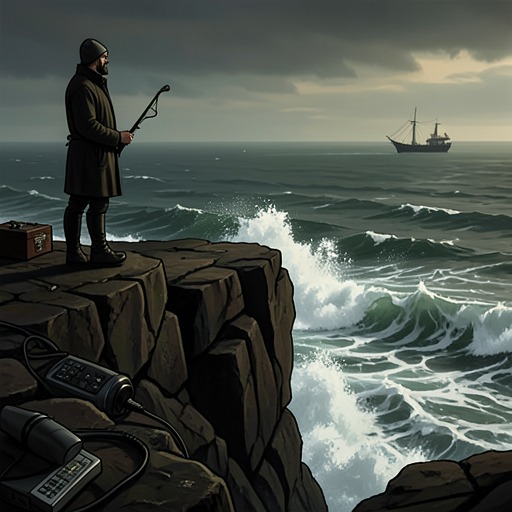
Gary repeatedly seeks settings spacious enough to accommodate the missing. He haunts the sky, the ocean, and the beach at Big Sur, imagining room there for those who are no longer alive. Books and animals become attempts to fill the void, though not substitutes that can erase it. When seals come swimming toward shore, or cormorants and gulls gather around him, his desire for company takes the form of an almost childlike hope. He smiles and reaches out an imploring hand.
This gesture makes the idea physical without resolving its contradiction: the absent cannot answer, but the living hand still seeks a companion. Gary’s account of animals is not simply an image of nature consoling a solitary person. It belongs to a continuing effort to remain open to friendship after repeated bereavement. The hope may be fragile, but it is renewed in encounters with other living creatures and in the act of looking for company where the loss has left space.
The Dead as a Shared Memory
The phrase also gathers individual grief into the memory of a group. Bouquillard, whom Gary met among the French who had left aboard the Oakrest, becomes one of the dead who remain vividly present to him. At thirty-five, Bouquillard was the senior man among them, slight and slightly bent, usually wearing a beret; Gary remembers a calm manner concealing an intense devotion to France. He became the first French ace in the Battle of Britain, then was brought down after his sixteenth victory. When his cockpit roof jammed and he could not escape, pilots in the operations room heard him sing the French battle hymn before his Hurricane exploded.
Years later, as Gary writes beside the ocean at Big Sur, that song returns to his lips and Bouquillard seems to rise beside him, alive and smiling. The passage turns recollection into an act of summoning, while its scale makes clear that no single place or memorial can contain the dead. Gary notes that no Paris street bears Bouquillard’s name, yet, for him, all the streets of France bear it. Private remembrance thus supplies a name and a continuing presence where public commemoration is absent.
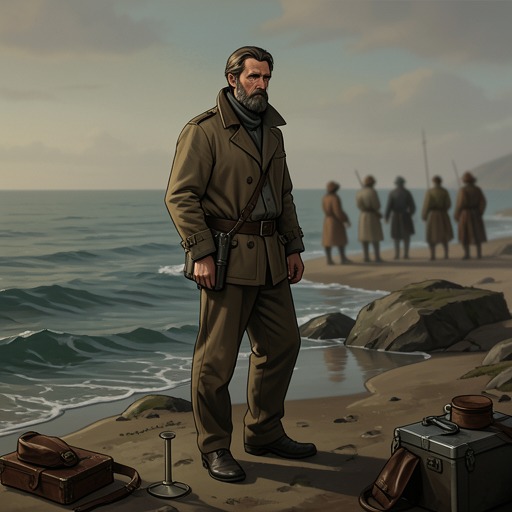
The wider company of the dead appears in Gary’s recollection of reaching Glasgow. Fifty French airmen were there; only three survived the war, and together the men accounted for one hundred and fifty enemy aircraft before they too were killed. Gary asks what purpose there is in whispering names to people for whom those names mean nothing, then answers through the persistence of his own attachment: the dead have never really left him. He sometimes feels that he continues living only as a matter of courtesy and connects the persistence of his heart with his longstanding love of animals. Memory here is both intimate and collective: the names matter because he carries the lives and losses they represent, even when others cannot recognize them.
Survival, Youth, and the Work of Remembrance
Gary also recognizes the dead in the young. In places full of youth, a face, gesture, laugh, or look may resemble a comrade killed at twenty. For a moment he can almost believe that something of his own youth has survived. He responds with deliberate acts of movement: raising his head, drawing himself upright, taking a foil, lunging in a garden, or climbing a hill to juggle three or four balls. These gestures do not reverse time or undo defeat. They test whether anything remains of the person he was and preserve his capacity for what he calls the species’ sacred naivety.
The ocean and the animals at Big Sur extend that hope beyond personal recollection. Gary lies on the sand, imagines the courage of those who will come after him, and watches seals and whales passing by the hundreds. The confidence that nobody has ever died is presented not as a factual denial of loss but as the imaginative conviction that life and courage recur in those who follow. The dead are present in the survivor’s memories, in the young whose faces recall them, and in the acts of attention that keep their companionship alive.
This understanding of absence resonates with Gary’s other acts of remembrance. As a child, he promised Mr. Piekielny that he would tell important people of the little man who had lived at Number 16, Grand Pohulanka, in Vilna. Mr. Piekielny was later murdered in the Nazi genocide, but Gary continued to keep the promise before public figures and audiences. The commitment does not bring him back; it preserves his existence in speech. Likewise, Gary describes receiving the Cross of the Liberation with pride directed toward the dead and the comradeship they shared. Densely populated emptiness names the cost of survival, but also the responsibility it leaves: to carry the dead forward through memory, witness, and renewed attention to the living.